

- All slots
- What High Volatility Actually Means
- Volatility and Return Are Two Different Numbers
- High, Medium and Low, and Where the Line Falls
- How to Read a Slot’s Volatility Before You Stake
- Who This Format Suits, and Who It Punishes
- The Mechanics That Travel With High Volatility
- How Studios Use the Swing
- Top rated
- High Volatility Slots FAQ
High Volatility Slots
High volatility slots pay out less often than the rest of the field and pay more when they finally do. Volatility, or variance, describes how a game spreads its returns rather than how much it returns, so a high variance title can carry the same long run average as a steady one and still empty a balance several times faster on the way there. The swing is the product, and it is the only thing the label promises.
Two consequences matter before you play. The band is readable in advance, from the paytable rather than from the marketing on the tile, and the size of the balance you brought decides how the format treats you far more than your appetite for risk does. What nothing gives you is a game that is due: a distribution has no memory of what it has already paid.







All 6,509 High Volatility Slots
Clear
Filters
Evil Rooster
Creative City
08-10-2026
Burguer Chaos
Chaosstudio
08-10-2026
Clocked In
Ferista Studio
08-10-2026
Borlesque Night 2
Arcan Game
08-10-2026
Wrecking Ball
Triedtestedlabs
08-10-2026
Color Carnival
Moonlight
08-10-2026
300 Guardians Extreme
Nexo Games
08-10-2026
Dead Air
Tilting Games
08-10-2026
Order!
Pigeon Studios
08-10-2026
Last Survivor
Blackout
08-10-2026
Pumpkin Hollow
M Industrie
08-10-2026
Stellar Rush
Cinder
08-10-2026
Gameshow Party Jackpot
Pragmatic Play
08-10-2026
Jack's Wrath
Remanence Studios
07-10-2026
Ra vs Osiris: Eternity
Pragmatic Play
07-10-2026
Pixel Fantasy
Jackbrix
07-10-2026
Realms of Sakura 100K
7elevenlabs
07-10-2026
Bandit Banks
Luckyluna
07-10-2026
Icebound Hoard
Ryvex Games
07-10-2026
Only Feetz
The Pixel Beat
07-10-2026
What High Volatility Actually Means
High volatility slots pay less often and pay more when they do. That is the whole definition, and everything else written about them follows from it. Volatility, which studios and players also call variance, describes the shape of a game’s returns rather than their quantity: how widely single results scatter around the average, and therefore how long a stretch of nothing can run before the game settles up.
The effect you feel is on the balance, not on the reels. A steady game gives back small amounts often enough that your funds drift down slowly and you keep spinning on returns as much as on deposits. A high variance game takes the same money in something closer to a straight line, then hands a large part of it back in a single round, or does not hand it back at all during the time you are sitting there. Identical average, completely different arrival pattern.
Nothing in that makes a volatile game generous or stingy. Distribution tells you where the money sits and in what size it moves. It says nothing about how much of it comes back, which is a separate figure with a separate name, and confusing the two is the reason so many players feel a game has turned cold when it is simply behaving as designed.
Volatility and Return Are Two Different Numbers
Volatility tells you how a slot’s returns are distributed; the published return figure tells you how much comes back across a run far longer than any session. One is shape, the other is quantity, and a game can sit high on both, low on both, or high on one and low on the other without any contradiction.
That is why this cluster and slots with a strong published return overlap heavily without describing the same thing. A generous figure paid out in rare lumps and a plainer one paid out in small regular pieces can leave your balance in two very different places after an hour, even though the long run promise behind them is close. The first needs you to still be there when it lands. The second does not.
Read the return figure as a statement about patience, then, rather than about safety. It is the closest thing a slot publishes to an honest average, and it is worth checking every time, but it will never tell you whether the next hundred spins are the quiet part or the loud one.
High, Medium and Low, and Where the Line Falls
The three bands describe hit pattern, not quality, and they are a rough scale rather than a measured one. What separates them in play is how much of the game’s total return the base spins are allowed to carry, and how much the feature keeps in reserve.
| Band | How the session tends to feel | What it asks of your balance |
|---|---|---|
| High | Long quiet stretches broken by a round that resolves most of the session at once | Enough spins to still be playing when the feature arrives |
| Medium | Base game returns keep the balance moving while the feature stays the main event | A working balance rather than a deep one |
| Low | Frequent small returns, a shallow drift, few moments that change the total | Very little, which is the point of it |
The line between this cluster and medium volatility slots is the shape of the session and not the size of the win: a medium game keeps its base spins working and lets the feature add to a total that already exists, while a high volatility game hands the outcome to the feature and lets the base game do little more than fund the wait. Both can print a large number. Only one of them lets you watch it build.
Low volatility sits outside that argument altogether. It is built for length of play, and if that is what you are after, a game designed to keep the reels turning will suit you better than anything in this band.
How to Read a Slot’s Volatility Before You Stake
Open the paytable and compare the top symbol against the bottom one. A wide gap between the best combination and the worst is the most reliable tell there is, because a game cannot pay a very large top prize at the same rate it pays a small one and still return the average it advertises. A short ladder with the rungs close together belongs to a steadier game, whatever the marketing on the tile says.
Then look at where the multipliers live. When the big numbers only exist inside the feature, the base game has been priced as a waiting room and the distribution follows. That is also the cleanest way to hold this cluster apart from slots built around multipliers: a multiplier is a component a game carries, volatility is the distribution that components like it produce, and plenty of steady games use one without ever becoming volatile.
The third signal is the entry price on the feature itself. Where a studio sells a way into the bonus round, it has put a number on what the round is worth relative to the base game, and the size of that number tells you how much of the game lives on the other side of the trigger. Fire in the Hole 2 from NoLimit City and Money Cart 2 from Relax Gaming are both built that way. Finally, take the game for a run before you fund it. The pattern announces itself long before a balance would have.
Who This Format Suits, and Who It Punishes
It suits you if you are playing for the feature round and are content to treat the base game as the price of reaching it. That is a real preference and a defensible one: the round is where the design effort went, the swing is the reason the round can pay what it does, and a player who enjoys the wait is getting exactly the product on offer.
It punishes you if your session has a fixed length, if the amount you brought is small relative to your stake, or if you need to see returns to stay interested. Those three are the same problem in different clothes. A high variance game asks to be given room, and room is measured in spins rather than in minutes or in money, which is why lowering the stake is almost always a better response than shortening the session.
The honest test takes five seconds. Divide what you are willing to lose by the stake you want to play, and look at the number of spins that leaves you. If it is not comfortably into the hundreds, the game will very likely end before its feature gets a fair chance to show up, and you will have paid for the volatility without ever seeing the part you paid for.
The Mechanics That Travel With High Volatility
Volatility is a result, not a part you can point at on the screen. Studios arrive at it through mechanics, and the same handful keep turning up because each one concentrates return into fewer, larger events. Knowing which are in front of you is the quickest way to guess how a game will behave before you have played a spin of it.
Triggers come first. A round that opens on scatter symbols gates most of the game behind a pattern that lands on its own schedule, and Gates of Olympus 1000 from Pragmatic Play is filed under both that mechanic and this one. Grids that pay by group rather than by line do something similar from the other direction: cluster pays needs a crowd of matching symbols before anything happens at all, which Oxygen 3 from ELK Studios and Reactoonz 2 from Play’n GO both demonstrate.
Then come the mechanics that stretch a single spin into a sequence. Cascading reels let one win clear space for the next, so results arrive in chains that are mostly short and occasionally very long, and Retroverse from Push Gaming and Pirots 5 from ELK Studios are both built on that chain. Wild symbols that stick in place or expand do the same job by making some spins count for several, which is the structure behind Wanted Dead or a Wild from Hacksaw Gaming. None of these guarantees a volatile game on its own. Stacked together, they rarely produce anything else.
How Studios Use the Swing
House style tells you more about how a game will feel than its theme ever will, and the parts a studio reaches for are where the style shows. NoLimit City builds the swing out of multipliers hung on a scatter-triggered round, which is the make-up of Mental, while San Quentin 2: Death Row is filed under wilds and no other modifier, which leaves its base game less to fall back on. Hacksaw Gaming arrives at similar ground by another road: Danny Dollar hangs its variance on a collect mechanic, Red Rascal on multipliers and re-spins.
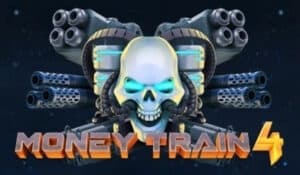
Relax Gaming keeps the swing in one long feature instead of spreading it over the grid, and Money Train 4 pays by scatter rather than by line, so what lands counts wherever it falls and the round decides the session. ELK Studios puts the variance into movement: Arcanum sits in cascading reels and cluster pays at once, so a single spin keeps resolving well after it looked finished. Push Gaming hands part of the decision back, and Razor Returns carries a gamble feature on top of the swing, which is a second source of variance stacked on the first.
That is the practical use of a studio name, and it beats sorting by theme every time. It will not tell you whether a particular title suits you, but it narrows the guess about pacing, about how hard the base game is working, and about whether the feature is the whole game or one part of it.
| Studio | Titles in this catalogue | Our rating |
|---|---|---|
| Pragmatic Play | 354 | 9.1 |
| Play’n GO | 154 | 8.6 |
| NoLimit City | 115 | 8.9 |
| Hacksaw Gaming | 109 | 8.7 |
| ELK Studios | 106 | 8.6 |
| Relax Gaming | 100 | 9 |
| Stakelogic | 95 | 8.4 |
| Blueprint Gaming | 89 | 9.1 |
| Red Tiger | 79 | 8.9 |
| AvatarUX | 79 | 8.3 |
Top High Volatility Slots
-
 Volatility: Very highMax Win: 99,999xThemes:
- - Horror
-
 Volatility: Very highMax Win: 150,000x
 -
 Volatility: Very highMax Win: 65,000xThemes:
- - Mining
- - Action and Adventure
-
4
 Volatility: Very highMax Win: 70,000xThemes:
- - Mining
-
5
 Volatility: Very highMax Win: 66,666xThemes:
- - Horror
-
6
 Volatility: HighMax Win: 12,500xThemes:
- - Action and Adventure
- - Western
- - Crime
-
7
 Volatility: HighMax Win: 25,000xThemes:
- - Action and Adventure
-
8
 Volatility: Very highMax Win: 200,000xThemes:
- - Crime
-
9
 Volatility: HighMax Win: 6,750xThemes:
- - Pets
- - Animals
-
10
 Volatility: HighMax Win: 25,000xThemes:
- - Sweets and Candy
High Volatility Slots FAQ
Is high volatility the same as high variance?
In practice, yes. The two words are used interchangeably across slot rules screens and review sites, and both refer to how widely a game’s results spread around its average. Statisticians can draw a distinction between them, but no slot you will load treats them as different settings, so reading one where you expected the other tells you nothing new.
Can you win big on low volatility slots?
You can, because any single spin can land well, but the game is built so that it happens far less often than a small return does. A low volatility title spreads its total across many modest results by design, so the large outcome exists at the end of a much thinner tail. The ceiling is usually lower too, which is the trade you accepted when you chose the steadier game.
Do high volatility slots pay out bigger wins?
They pay bigger when they pay, and that is not the same as paying more. The distribution moves return out of the frequent small results and into the rare large one, so the size of the best outcome rises while your chance of meeting it falls. Over a long enough run the total is set by the return figure, not by the volatility band.
What makes one high volatility slot a better choice than another?
Compare the published return figures of two titles that swing the same amount, and take the higher one. Volatility is a description of shape and does not rank anything, so once two games sit in the same band the only thing separating them on paper is how much each gives back over the long run. Theme and studio decide which of the survivors you enjoy playing, not which of them is the better bet.
Can you try a high volatility slot for free first?
Demo play costs nothing and it is worth more on a volatile game than on a steady one, because the thing you need to judge takes time to show itself. Watch the length of the quiet stretches rather than the size of anything that lands: the stretches are what end a session early, and they are the one property of a slot that no written summary of it can convey.
What is the most profitable slot to play?
Choose on the shape of the shortfall, because that is the part of the outcome you control. No slot is built to give back more than it takes, so profit is not a property you can shop for; what differs between two games is how the gap reaches you. A steady title spends a balance slowly and predictably, while the long quiet stretches and sudden resolutions this cluster is made of concentrate a whole session into a handful of rounds. Pick the one you would rather sit through.

When covering industry updates, Secod focuses on contextual analysis rather than simple reporting. His experience in SEO and platform strategy allows him to evaluate how regulatory changes, provider launches or promotional shifts may impact players directly. Each news piece aims to deliver clarity, relevance and practical insight.
Other Slot features on BonusTiime